I Tested the Best AI Travel Tools So You Don’t Have To

AI travel assistants are no longer just a novelty. Some can build itineraries, map out neighborhoods, compare hotels, track reservations, translate menus, organize group trips, or help you decide what to do when your plans go sideways.
The trick is choosing the right tool for the job. Some AI planners are great for brainstorming. Others are better for road trips, live booking, group planning, or quick questions while you are already traveling.
Here is a friendly guide to the AI travel tools worth knowing, what they are best at, and how to use them without accidentally letting a robot overbook your vacation.
1| Mindtrip: Best for Visual Planners
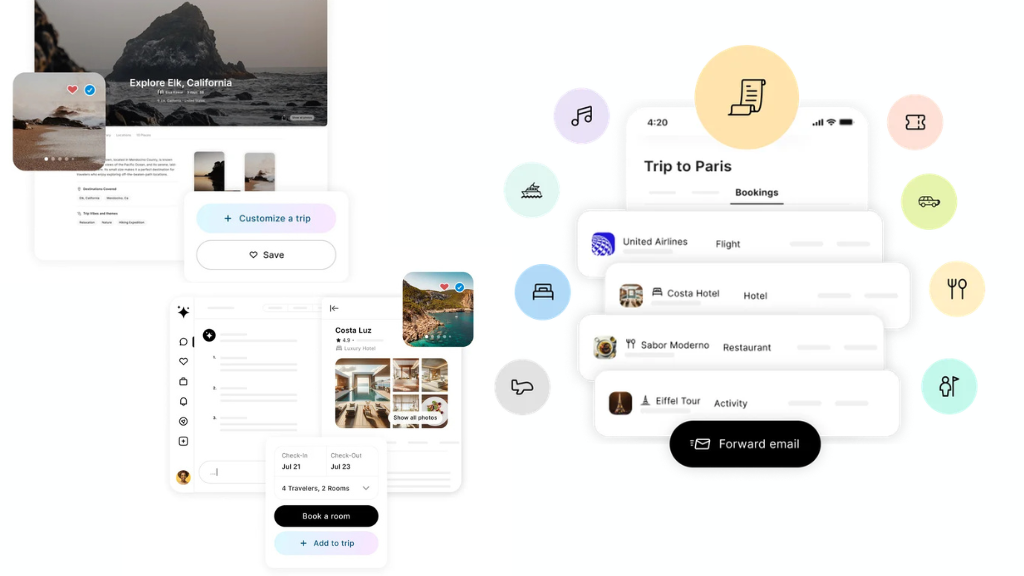
Mindtrip is a strong choice for travelers who think in maps, not walls of text. Instead of giving you a plain itinerary and calling it a day, it helps turn ideas into mapped-out places, collections, and shareable trip plans.
That makes it especially helpful for multi-stop trips, city breaks, and travelers who save inspiration from articles, screenshots, social media, or Google Maps.
Seeing your plans on a map makes it easier to spot the classic travel mistake: scheduling breakfast in one neighborhood, lunch across town, and dinner somewhere that requires two trains and a prayer.
Use Mindtrip when you want to organize scattered inspiration into something visual and practical. Just remember to verify hours, prices, and reservation rules before building your day around any suggestion.
Layla: Best for Chat-First Planning

Layla is useful for people who want the feel of texting a travel agent. You describe your trip in plain English, then get suggestions for destinations, hotels, flights, activities, and rough itineraries.
It is a good tool when you do not know where to begin. Ask it for a “warm four-day beach trip under $1,500,” a “romantic weekend with direct flights from Chicago,” or a “family-friendly Europe itinerary with short train rides.”
Layla is best as a starting point, not the final answer. Use it to gather ideas and compare possibilities, then check booking details directly before paying. Chat tools can sound polished even when the fine print needs work.
3| Trip.Planner by Trip.com: Best for Booking in One Place
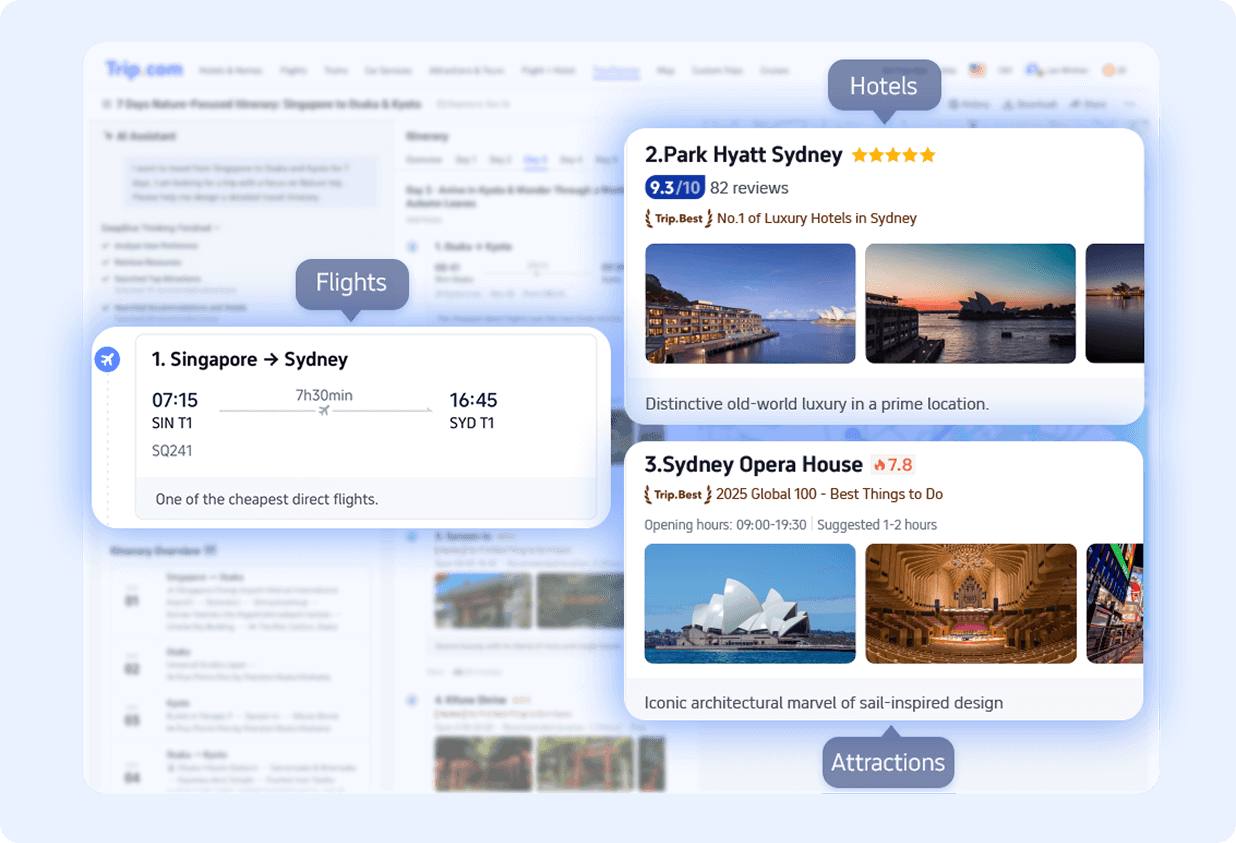
Trip.Planner works well for travelers who like the idea of planning and booking inside the same ecosystem. It can generate an itinerary, help edit trip details, show map-based plans, and connect users to flights, hotels, trains, and attractions.
That convenience is the big selling point. If you already use Trip.com, having planning and booking tied together can reduce the number of tabs and apps you need.
The trade-off is that you are planning inside a marketplace. Before booking, compare prices and cancellation policies directly with airlines, hotels, and attraction websites. Convenience is lovely, but flexible cancellation rules are lovelier when plans change.
4| Wanderlog: Best for Road Trips and Group Travel
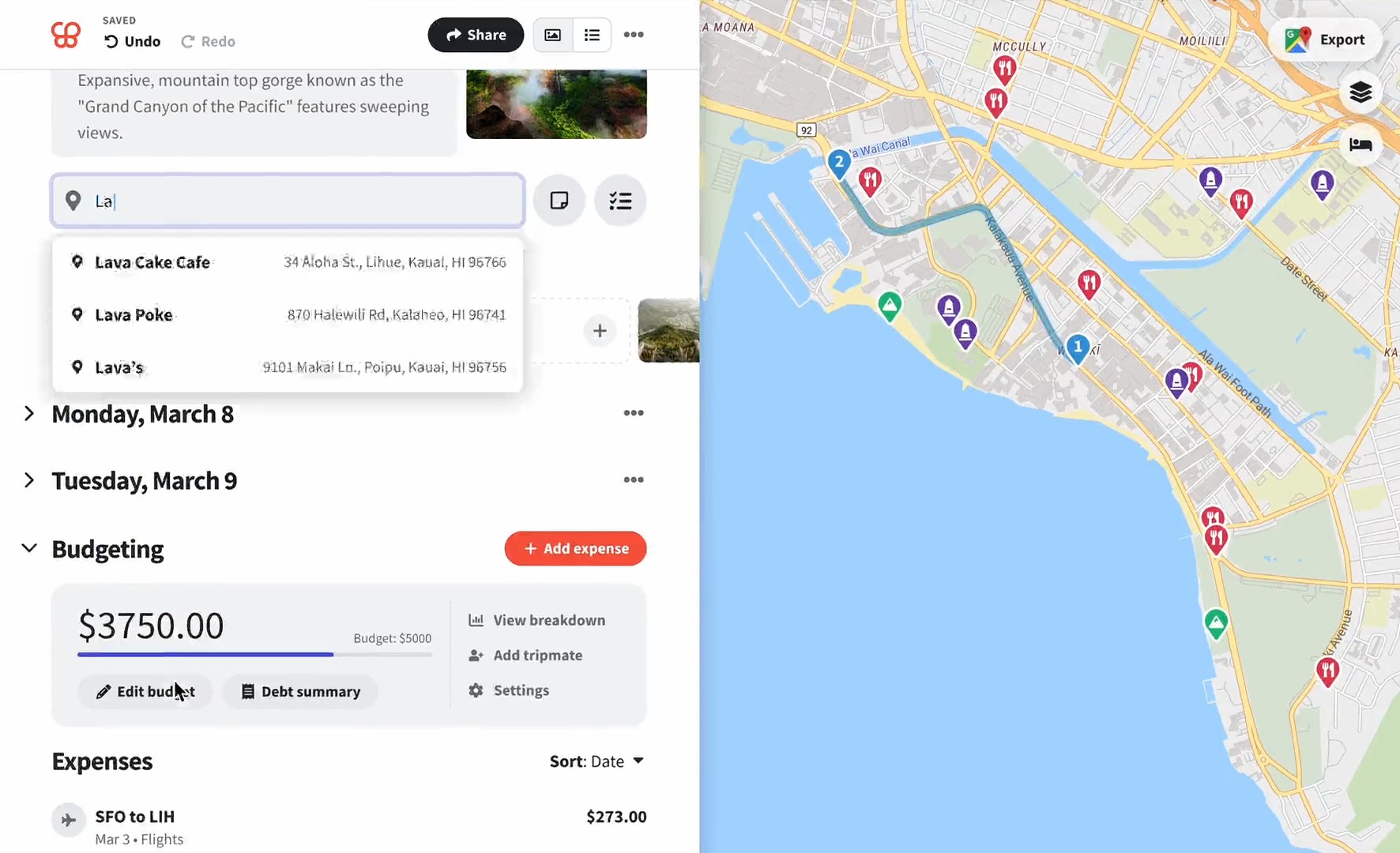
Wanderlog is less of a flashy chatbot and more of a practical trip command center. It helps organize places, routes, reservations, budgets, notes, and group plans in one place.
That makes it especially useful for road trips, national park adventures, multi-city vacations, and friend groups where everyone has opinions. Instead of juggling group texts, spreadsheets, and random saved links, you can build a shared plan that people can actually edit.
Wanderlog is great when the trip has moving parts. It may take a little more effort than asking a chatbot for a finished itinerary, but that effort can pay off when you are on the road and need the plan to make sense.