
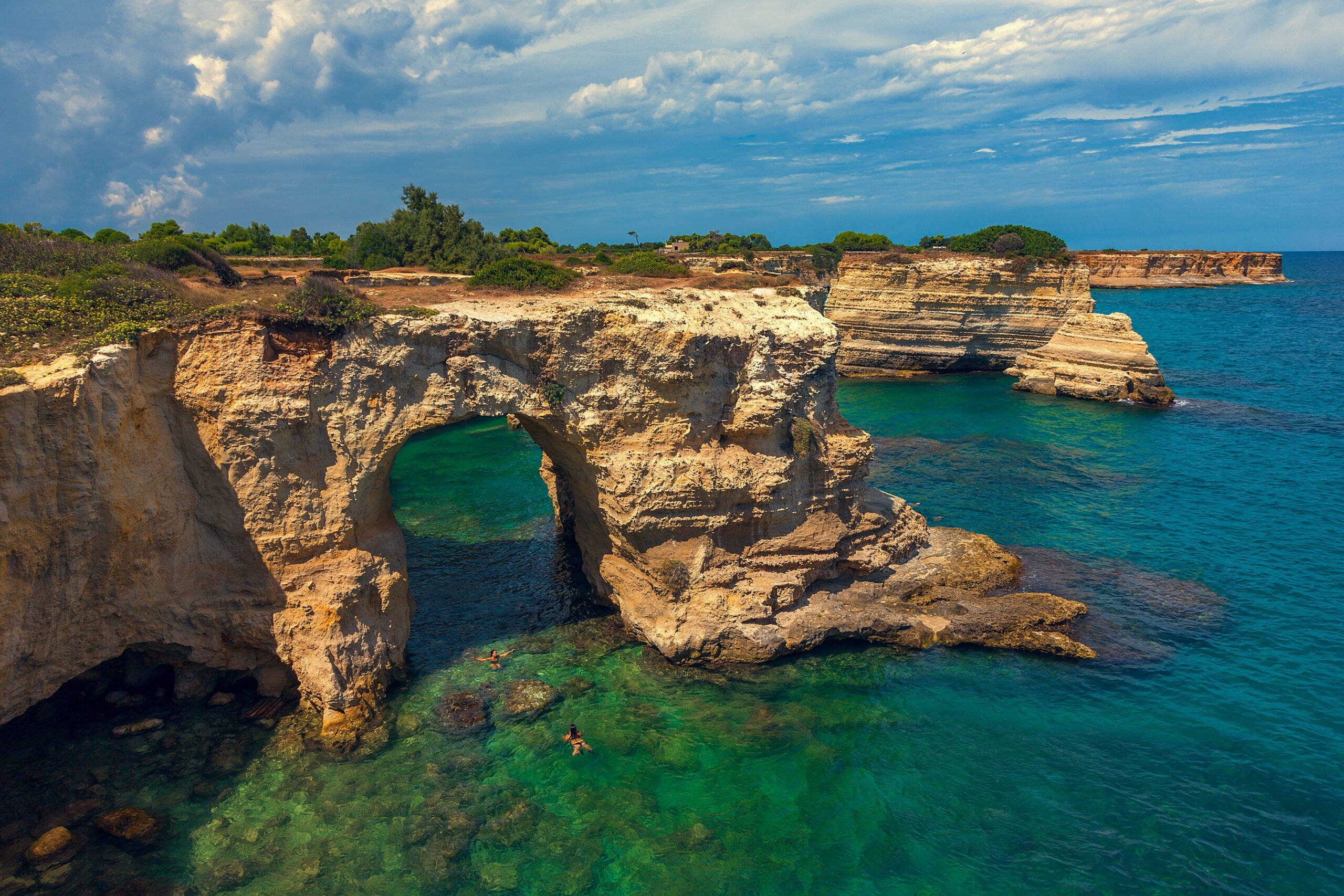
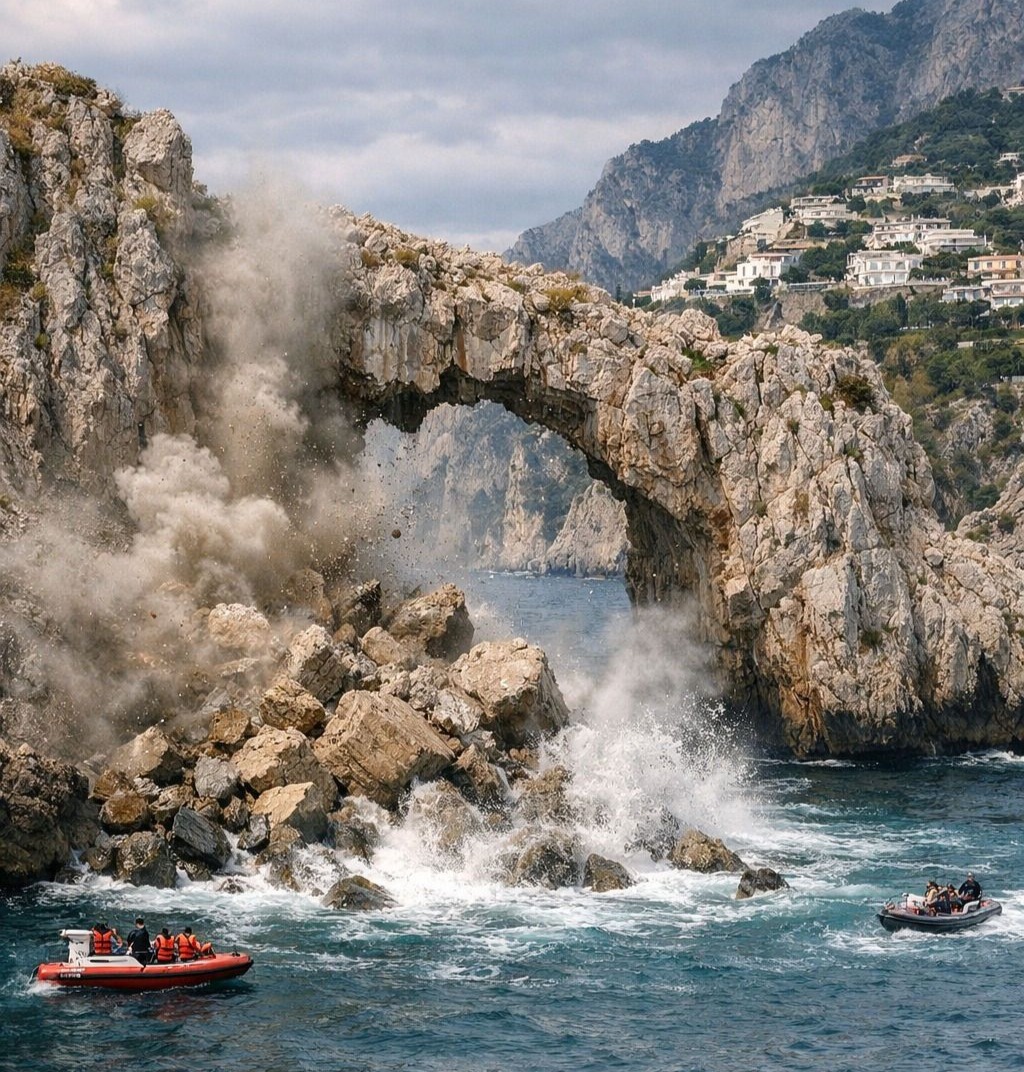
Heavy storms devastated one of Italy’s most romantic landmarks on the most romantic day of the year. The Faraglioni di Sant’Andrea, better known as the “Lovers’ Arch,” collapsed on Valentine’s Day during violent weather that swept across southern Italy. Located on the stunning Salento coast in Puglia, the region known as the heel of Italy’s boot, this natural stone archway had been a beloved destination for couples for centuries. Local mayor Maurizio Cisternino described the loss as “a blow to the heart” for the community and tourism industry alike.
Centuries of Romance Under the Arch
For generations, the Lovers’ Arch held special significance for couples visiting the turquoise waters of the Adriatic Sea. According to cherished local legend, those who kissed beneath the natural stone formation were destined for eternal love. The arch became a popular spot for marriage proposals, first kisses, and wedding celebrations starting in the late 18th century. Carved by centuries of harsh winds and pounding seas working against the Calcarenite stone cliffs, the arch transformed from a strategic pirate lookout into a symbol of everlasting romance that drew visitors from around the world.
Modern Love Meets Ancient Wonder
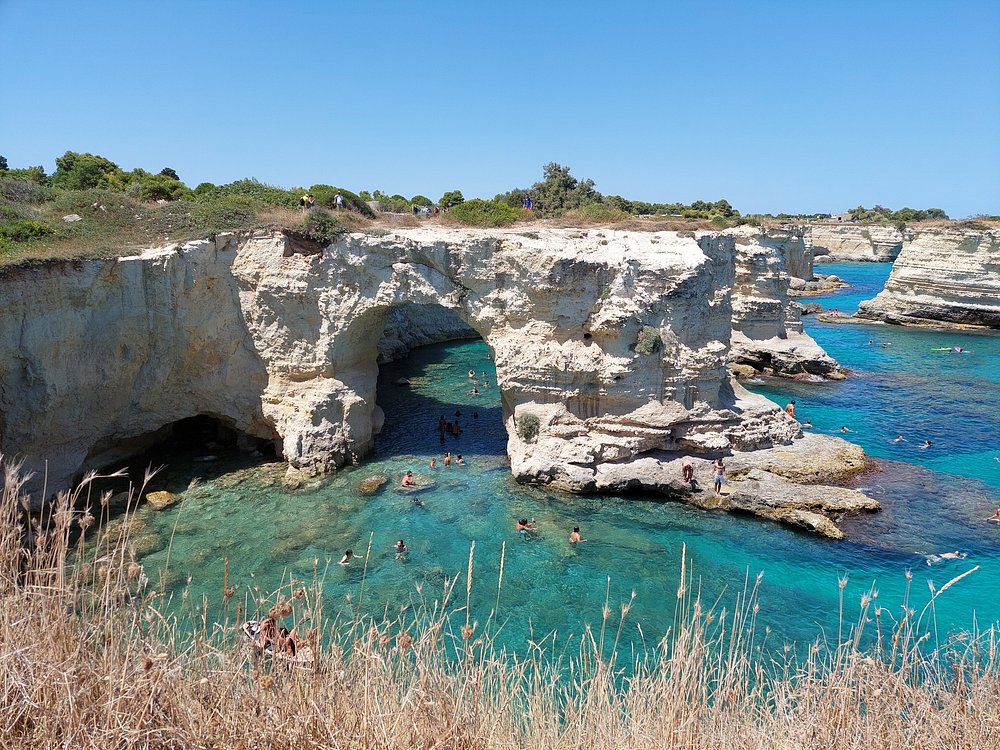
Social media breathed new life into the centuries-old landmark in recent years. Instagram posts featuring the picturesque arch attracted thousands of additional couples to the remote coastal location, according to Mayor Cisternino. Because the site remained free and open to the public, exact visitor numbers are impossible to track, but the surge in tourism was undeniable. Hotels and resorts began sprouting up nearby to accommodate the influx of romantically inclined travelers, with many establishments proudly naming themselves after the famous arch. The combination of natural beauty, romantic legend, and social media appeal created the perfect storm of popularity for this coastal treasure.
Personal Memories Lost to the Waves
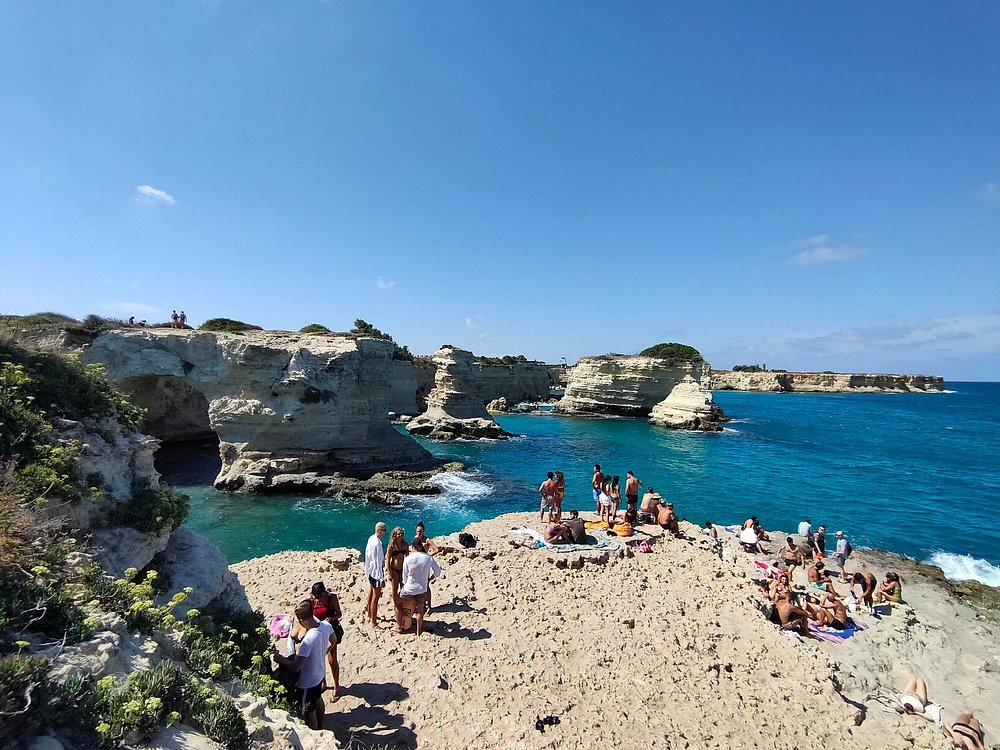
Local residents feel the loss deeply, as the arch holds decades of personal memories. Lorenzo Barlato, who proposed to his wife on the clifftop overlooking the arch more than 40 years ago, shared his heartbreak on Facebook following the collapse. The couple had made returning to the spot a tradition for their anniversaries over the decades. “I couldn’t wait to return,” Barlato wrote after learning of Saturday’s destruction. “Now, unfortunately, all I have left are the many beautiful photos I took of that piece of paradise.” His sentiment echoes that of countless other couples who built their love stories around this natural wonder.
Climate Change and Extreme Weather Take Their Toll
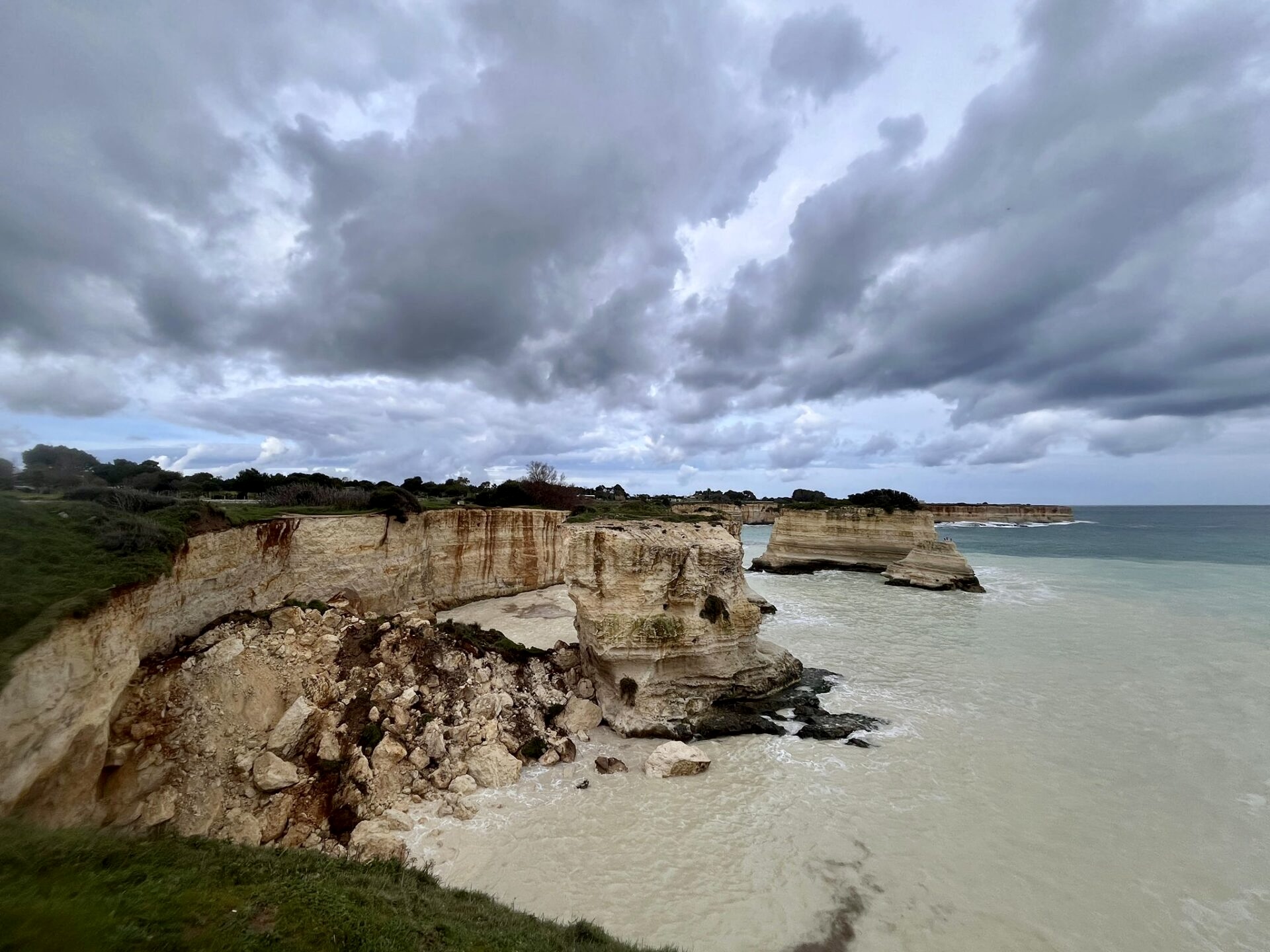
The arch’s collapse came after weeks of increasingly violent storms battering southern Italy. Scientists point to warmer sea temperatures driven by climate change as a contributing factor to the extreme weather patterns. The landmark had already sustained damage from Cyclone Harry just one month earlier in January, weakening its already fragile structure. The Valentine’s Day storm proved to be the final blow, reducing centuries of natural sculpture to rubble in the turbulent waters below. The tragedy highlights the growing vulnerability of coastal landmarks to intensifying weather events across the Mediterranean.
Warnings Went Unheeded for Years
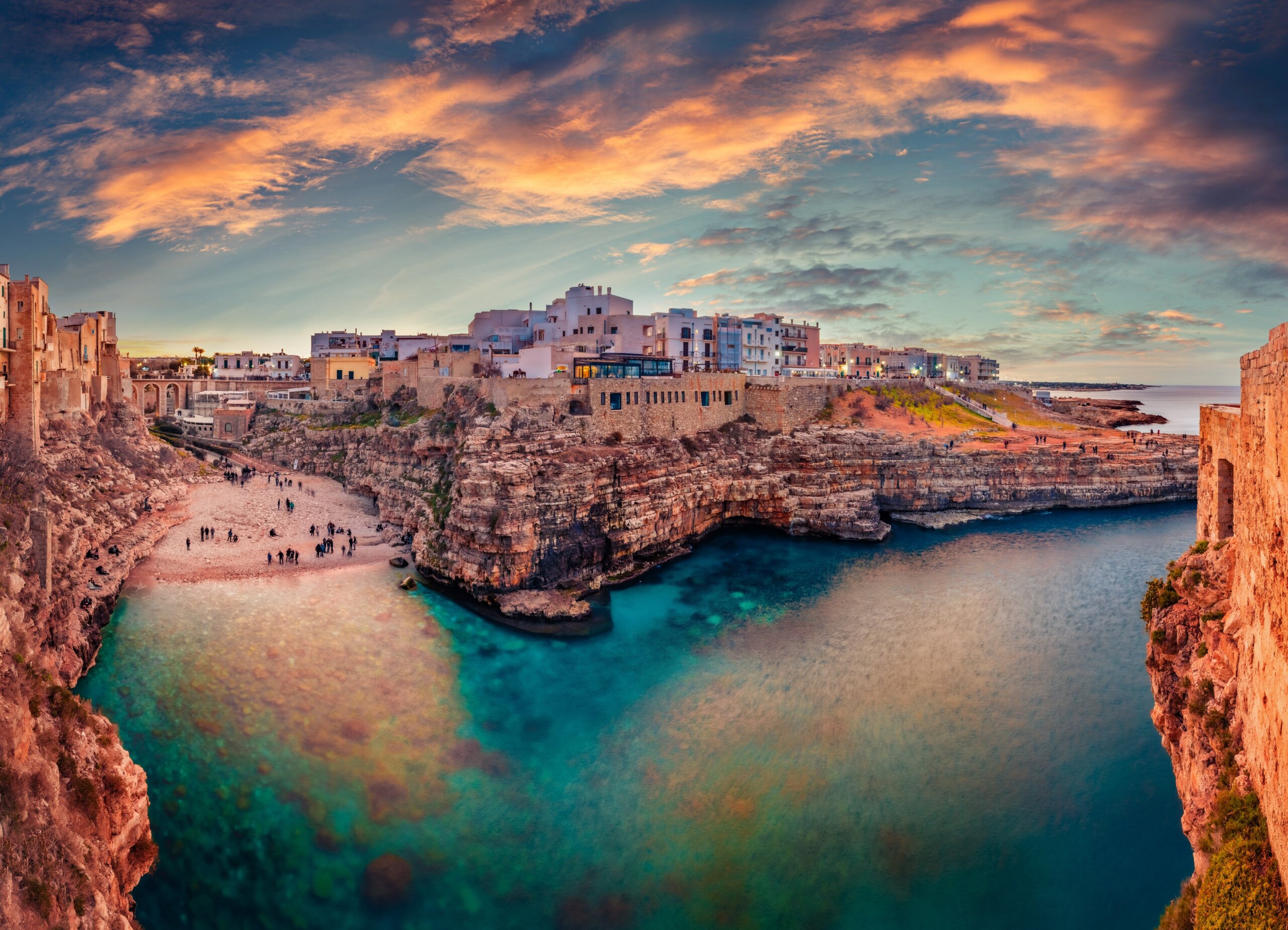
Local officials had long recognized the danger facing the beloved landmark. In 2024, authorities applied for a 4.5 million dollar grant to fund a preservation project aimed at combating coastal erosion around the arch. Unfortunately, the funding request was denied, leaving the structure vulnerable to the elements. “It’s a tragedy we knew was inevitable, we just didn’t expect it to happen so soon,” Mayor Cisternino told local media the day after the collapse. The lack of resources to protect coastal heritage sites raises questions about priorities in preserving Italy’s natural and cultural treasures.
A Transformed Coastline
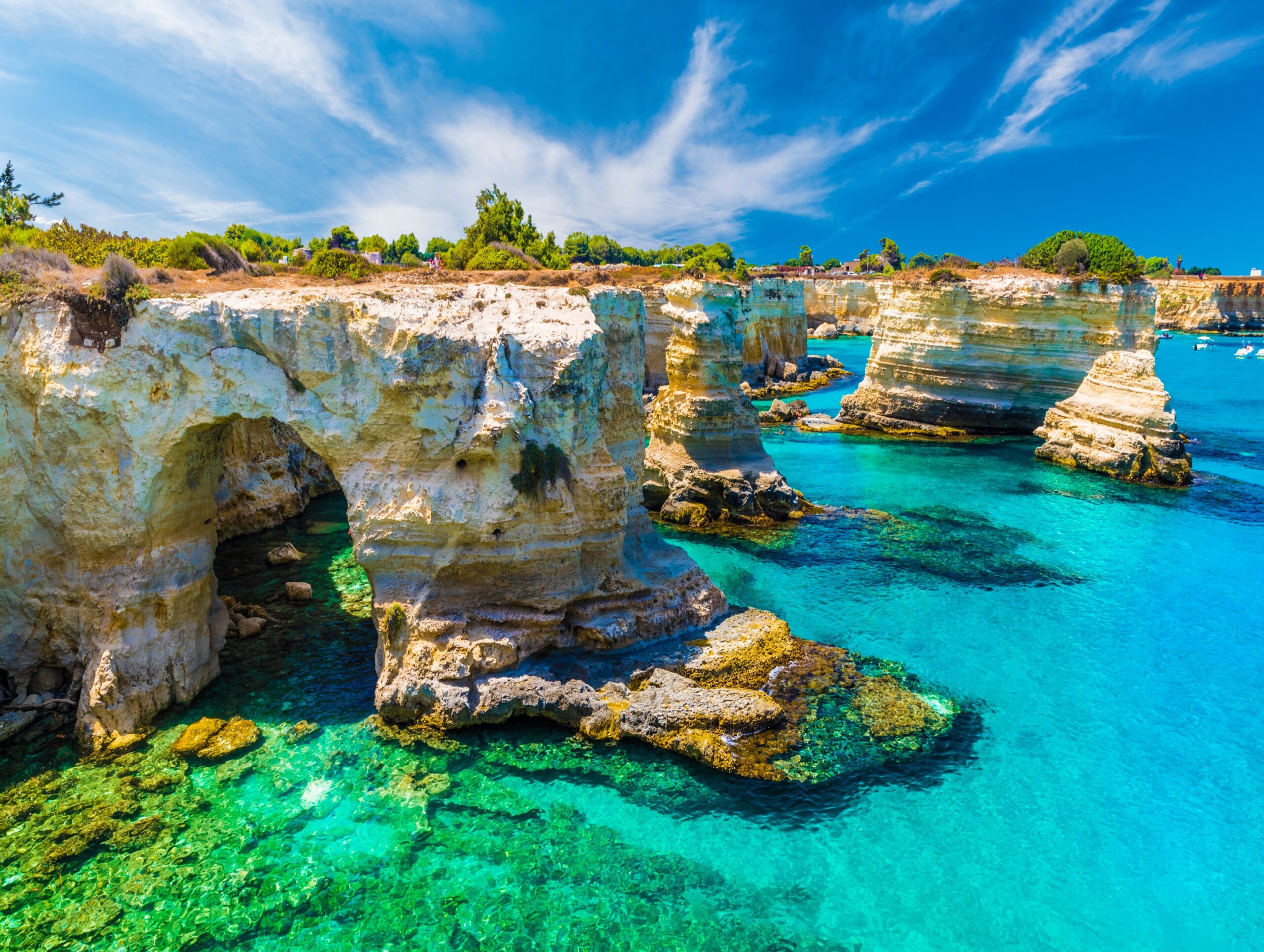
Mayor Cisternino noted that the natural landscape of Salento has changed dramatically over recent decades. “Nature has been transformed: what was there 30 years ago is no longer there,” he explained to CNN. While acknowledging that “nature has reclaimed the arch, just as it created it,” he emphasized the urgent need for resources to address ongoing coastal challenges. The collapse of the Lovers’ Arch serves as a stark reminder that these geological formations, though seemingly permanent, are constantly evolving under the forces of wind, water, and climate. Without intervention, more beloved landmarks may face similar fates.
Part of a Larger Crisis
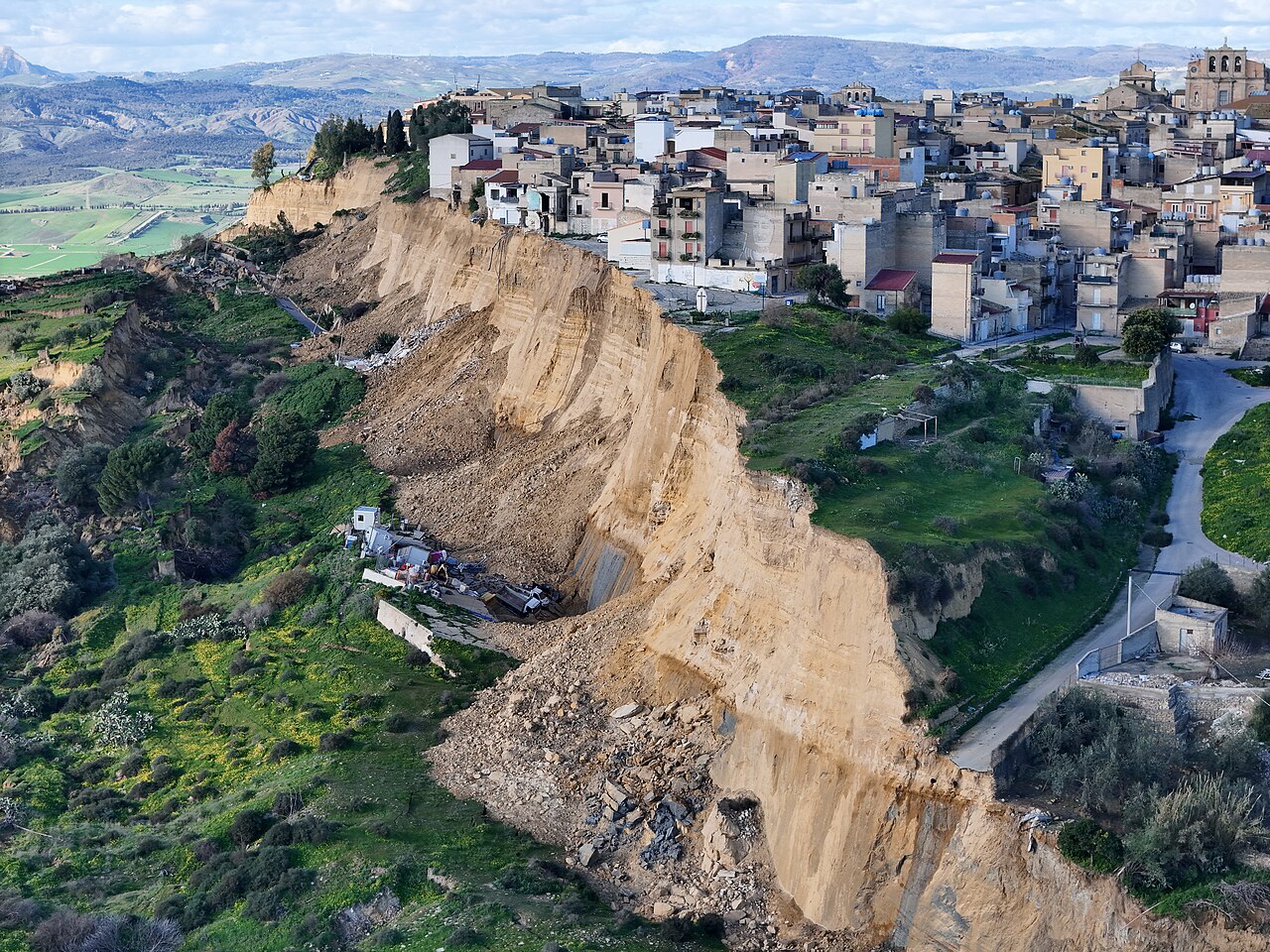
The destruction of the Lovers’ Arch represents just one incident in a season of devastating storms across southern Italy. In Sicily, a recent landslide caused houses to tumble into a ravine in the town of Niscemi. Widespread flooding has claimed several lives, including a man who died when his home collapsed near Rome last week. The extreme weather events have strained emergency services and tested infrastructure throughout the region. The cumulative impact on communities, tourism, and cultural heritage sites like the arch paints a troubling picture of Italy’s vulnerability to increasingly severe weather patterns.
Mourning What Once Symbolized Joy
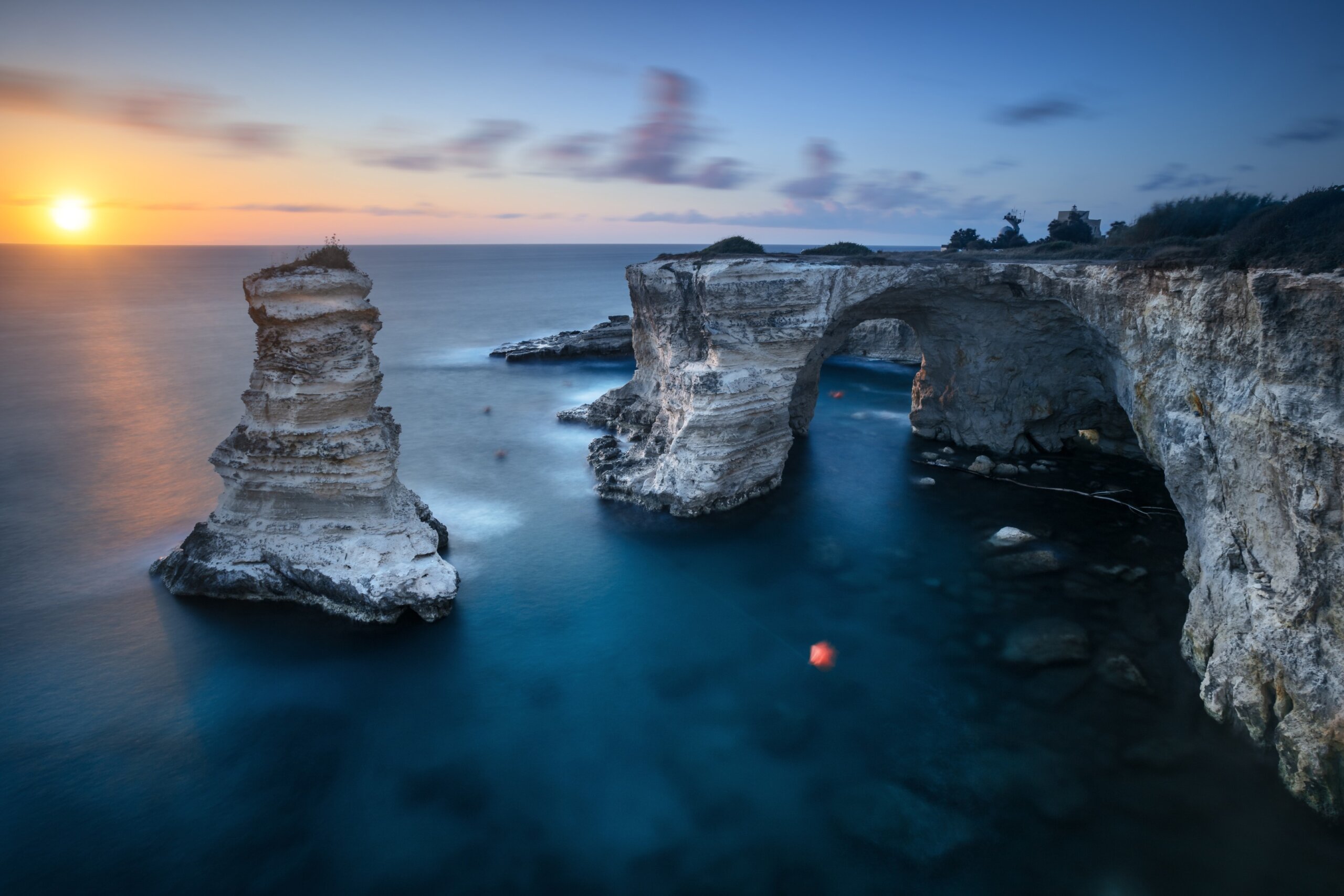
The remnants of the fallen arch will be left to wash out to sea, the municipality announced. “It’s like a funeral,” said Puglia tourism councilor Francesco Stella on Sunday, reflecting on the loss of what was once among Italy’s happiest places. The collapse represents not only the loss of a geological formation but the end of a living tradition that connected generations of lovers to the Salento coast. While nature created the arch through patient centuries of erosion, the same forces have now reclaimed it in a single violent storm. The Valentine’s Day timing adds poignant symbolism to a tragedy that has left a community heartbroken and a tourism industry reeling from what Mayor Cisternino called “a devastating blow to the image of Salento.”
Looking for more travel inspiration? Check out these popular guides next: