Where Scotland’s Legends Still Linger in the Landscape
Scotland doesn’t separate its stories from its landscape. They sit in the same places, sometimes secretly, sometimes right out there in the open.
As you move through this beautiful country, you’ll notice that the line between history and folklore is rather blurred. A river holds more than its depth. A valley carries more than its shape.
And certain places still feel like they’re holding onto something from the past, whether you believe in it or not.
The River Carron and the Story of the Kelpie
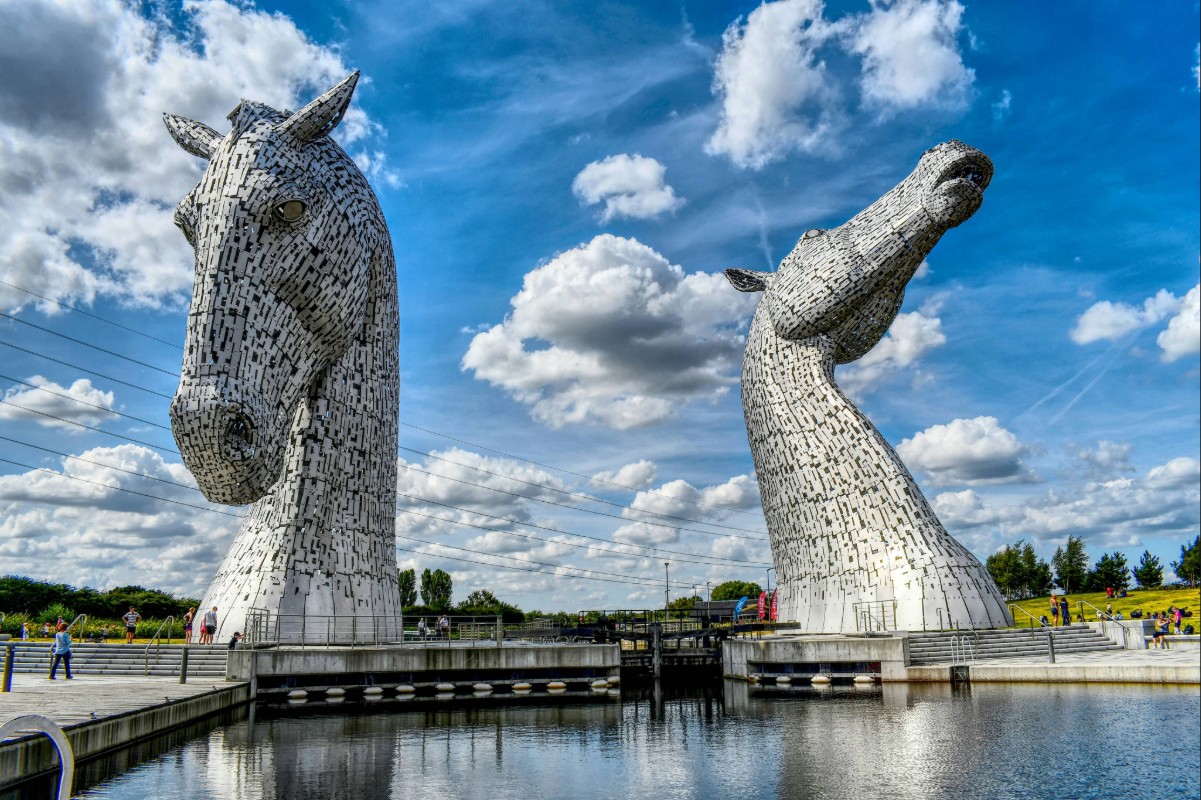
Stories of the kelpies are told all across Scotland, but they’re always tied to water that moves quickly or runs deep. In this tradition, a kelpie takes the form of a horse, and it’s always calm enough to approach. The danger arises when someone tries to climb onto its back.
Once they do, they can’t get off. The kelpie’s skin holds the rider there, and the horse carries them straight into the water.
These stories weren’t invented as entertainment. They were practical warnings, especially for children, about rivers that could pull them under without much effort.
And, around Falkirk, where waterways cut through the land, that danger was very real.
The Each Uisge of the Western Highlands
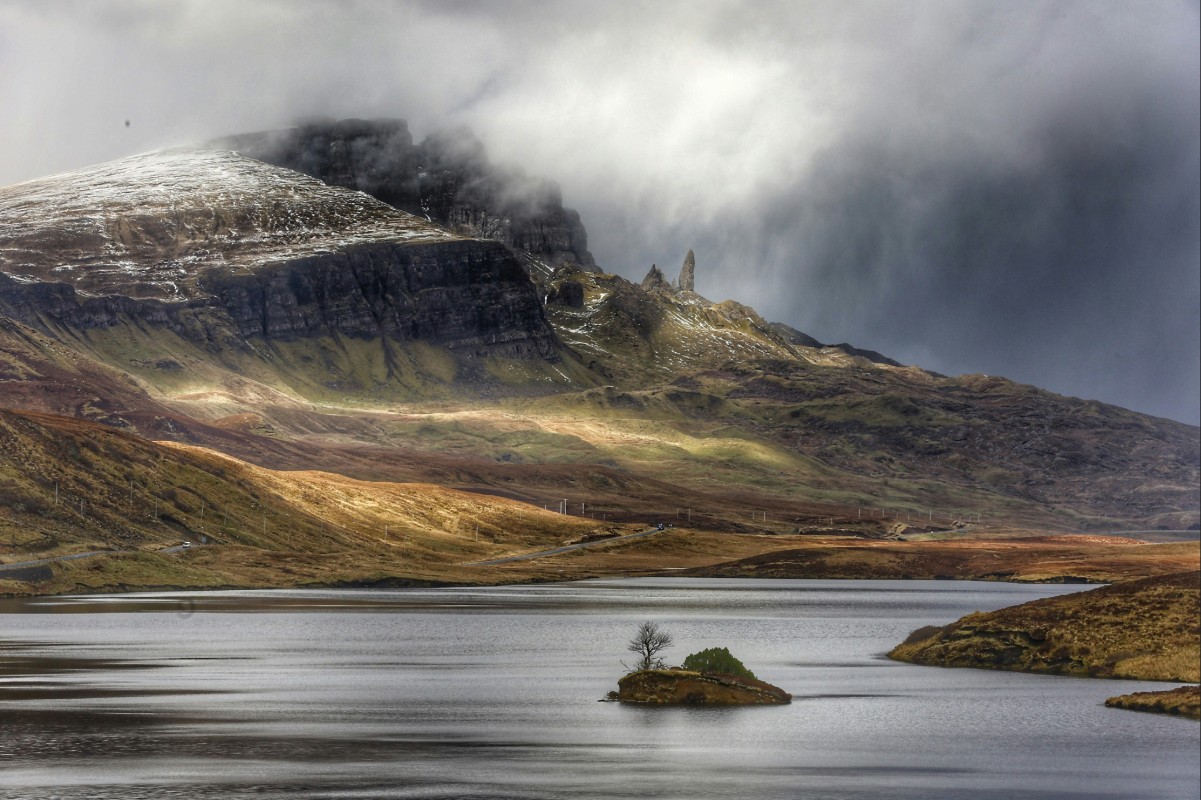
Along Scotland’s sea lochs and deeper inland waters, the kelpie takes on a more dangerous form: the Each Uisge, often described as a water horse that comes from the sea. Like the kelpie, it appears calm at first. But, once someone mounts it, the outcome is far worse.
The Each Uisge doesn’t always drown its victim immediately. Sometimes, it tears its prey apart, leaving only the liver behind. These accounts were recorded in Gaelic oral tradition across the Highlands and Islands, particularly in places where the sea and land meet without much separation.
This is folklore that doesn’t exactly read like Snow White or Cinderella. Instead, it was designed as a warning sign for a coastline where the water could turn quickly, and where survival depended on respecting what you couldn’t control.
Ben Macdui and Am Fear Liath Mòr
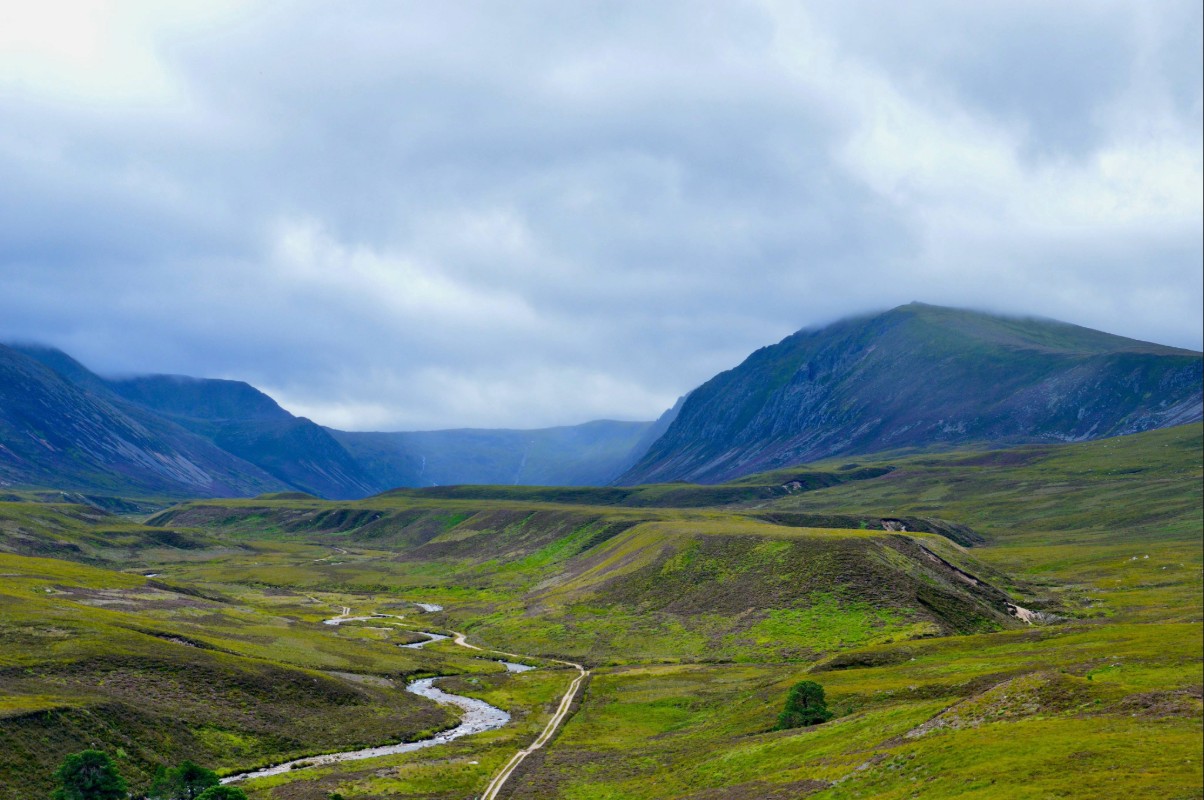
High in the Cairngorms, Ben Macdui tells a different kind of story. Climbers and walkers have long reported encounters with Am Fear Liath Mòr, the Big Grey Man. The descriptions are consistent.
He has a large presence, often unseen but sensed, and accompanied by the sound of footsteps that don’t match your own.
Accounts go back to at least the 19th century, including reports from experienced mountaineers who struggled to explain what they experienced. This isn’t a moralistic or foreboding tale like the kelpie.
It’s simply a story, something people believed they experienced in a landscape that’s vast and empty enough to make the tale seem true.
The Fairy Pools, Isle of Skye
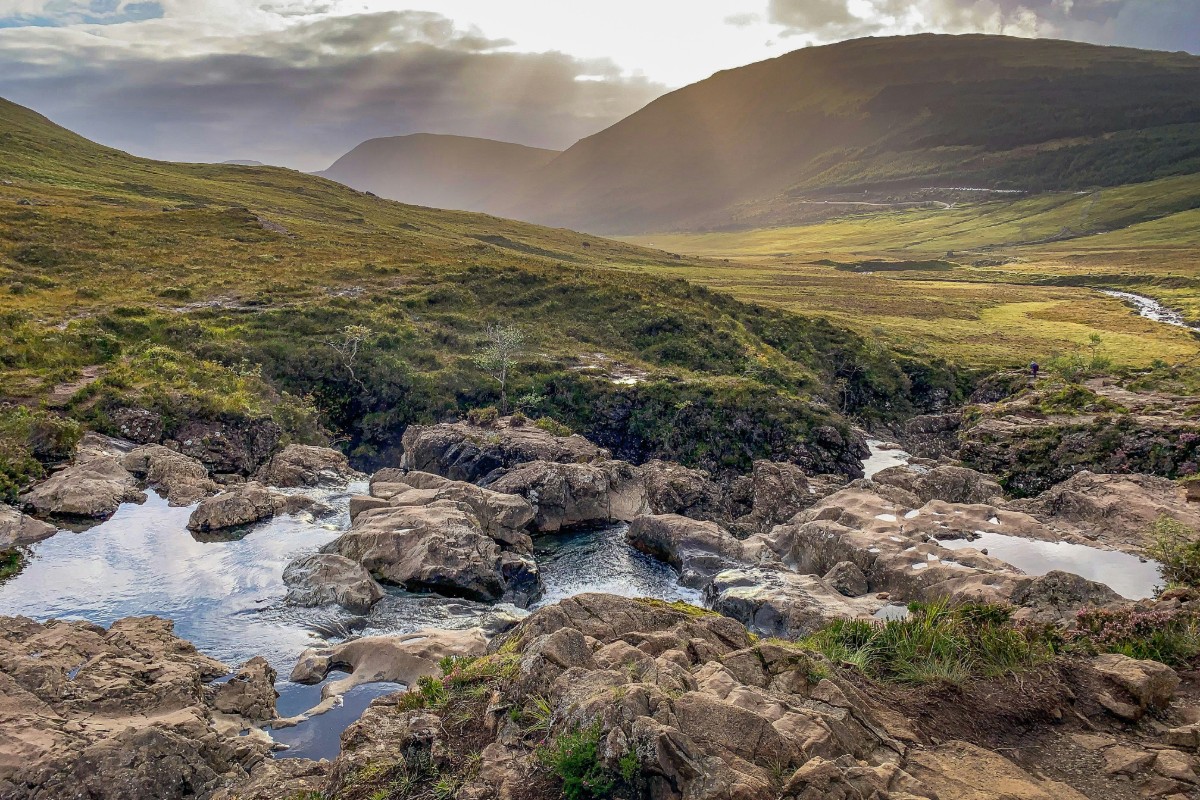
The Fairy Pools take their name from older beliefs about the Sìth, beings often translated as fairies, though they were never depicted as harmless little Tinker Bells.
In Gaelic tradition, water is a boundary. Rivers, lochs, and pools were treated as entry points to the otherworld, places where people might disappear or return changed.
Oral traditions recorded across Skye describe encounters near water where time behaves differently, or where something crosses over without warning.
In that sense, they’re close to Ireland’s own “thin places,” where the boundary between worlds is understood to narrow, not vanish.
The Sìth don’t live anywhere at random. They’re tied to specific features in the landscape, particularly hills, standing stones, and places where the ground or water are set apart.
Even now, certain sites are still treated with a degree of care, not out of superstition alone, but out of a long-standing understanding that some places shouldn’t be disturbed.
As you walk along the Fairy Pools, you’ll follow a chain of clear basins fed by fast-moving water from the Cuillin mountains. The clarity draws attention to them, which is exactly why they were marked and remembered.